What does clean skincare really mean?
“Clean” has no legal definition for US cosmetics. Here’s exactly what it means at Mystic Hollow, from parabens to fragrance and mica, and how to check it.
By Mystic Hollow Cosmetics, Henderson, Nevada Published 7 min read
Short answer
“Clean” has no legal definition for US cosmetics, so each brand defines it. Ours: no sulfates, parabens, silicones, mineral oil, petrolatum or synthetic dyes. Colour comes from charcoal and mineral pigments, including synthetic mica. Some fragrances are synthetic; each is researched first and free of known carcinogens, mutagens and organ toxicants. Every ingredient is named and explained.
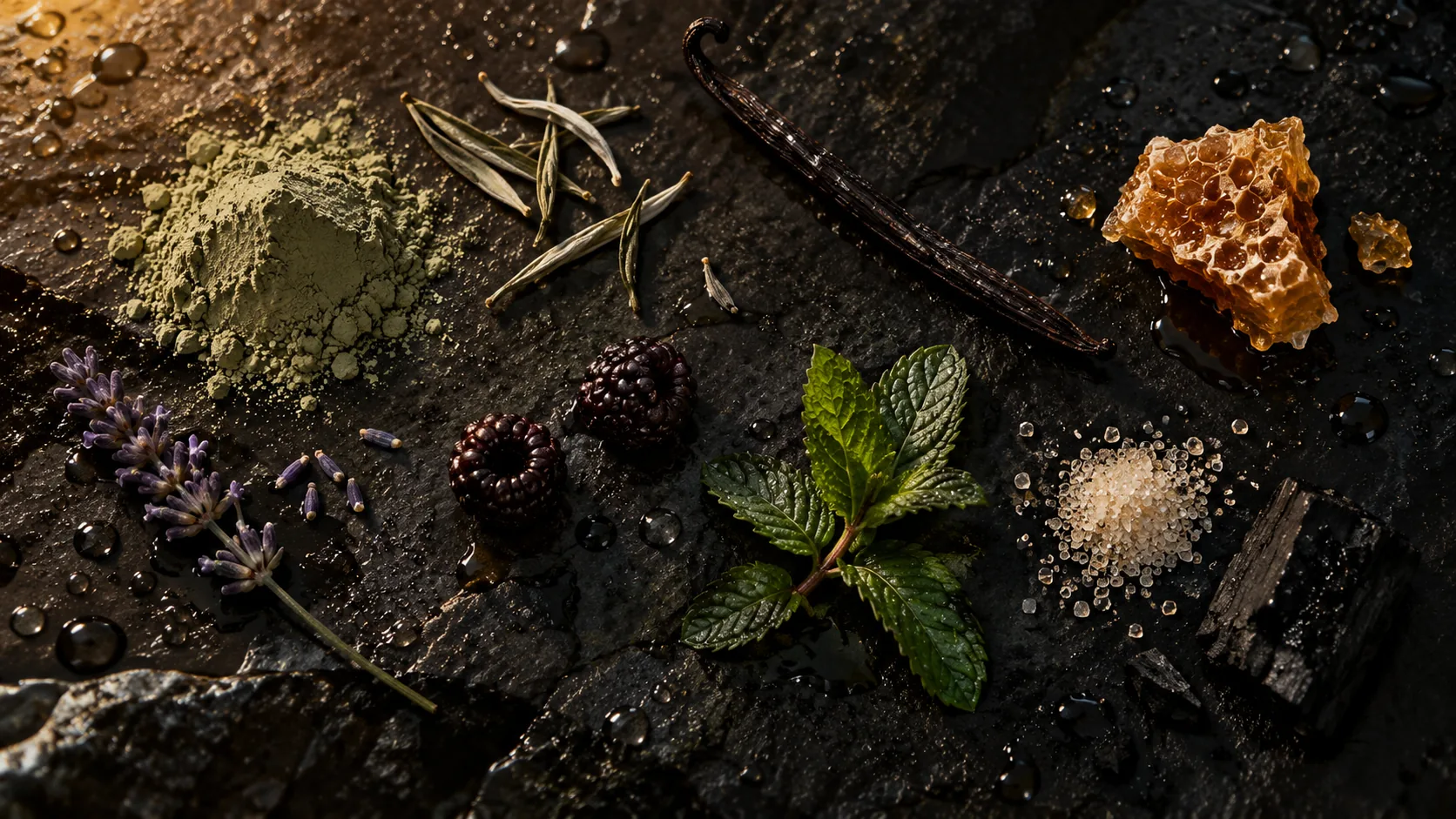
Key takeaways
- US cosmetics law doesn’t define “clean” or “natural”, and FDA doesn’t define “organic” for cosmetics.
- Most of our standard can be checked on the ingredient list itself, and every ingredient has its own page explaining what it is and why it’s there.
- Some of our fragrances are synthetic. Each is researched before we use it and is free of known carcinogens, mutagens and organ toxicants, and a formula with fragrance says so on its list.
- Natural isn’t automatically gentler: US law treats plant ingredients like any others, and essential oils are a known cause of skin reactions.
- These are cosmetics. They change how skin looks and feels; they don’t treat anything.
Is “clean” a regulated term?
No. US cosmetics law defines what a cosmetic is and how its label must list ingredients, but it doesn’t define “clean”. FDA’s page on label claims says claims must be truthful and not misleading, but it gives no definition of “natural”. FDA also says “organic” isn’t defined in the cosmetics laws it enforces; the USDA’s National Organic Program sets that standard for agricultural ingredients.
The biggest change to US cosmetics law in decades, the Modernization of Cosmetics Regulation Act of 2022 (MoCRA), added facility registration, product listing, safety substantiation and serious adverse event reporting. It didn’t define “clean” either. So any brand can print the word and mean anything by it, which is why we spell out exactly what we mean.
What does clean mean at Mystic Hollow?
Here is our standard, point by point. Most of it can be checked against the full ingredient list printed on every label and shown on every product page. Where a point can’t be read off a list, as with how we choose fragrance, we explain it in plain words.
| Point | What it means in our formulas |
|---|---|
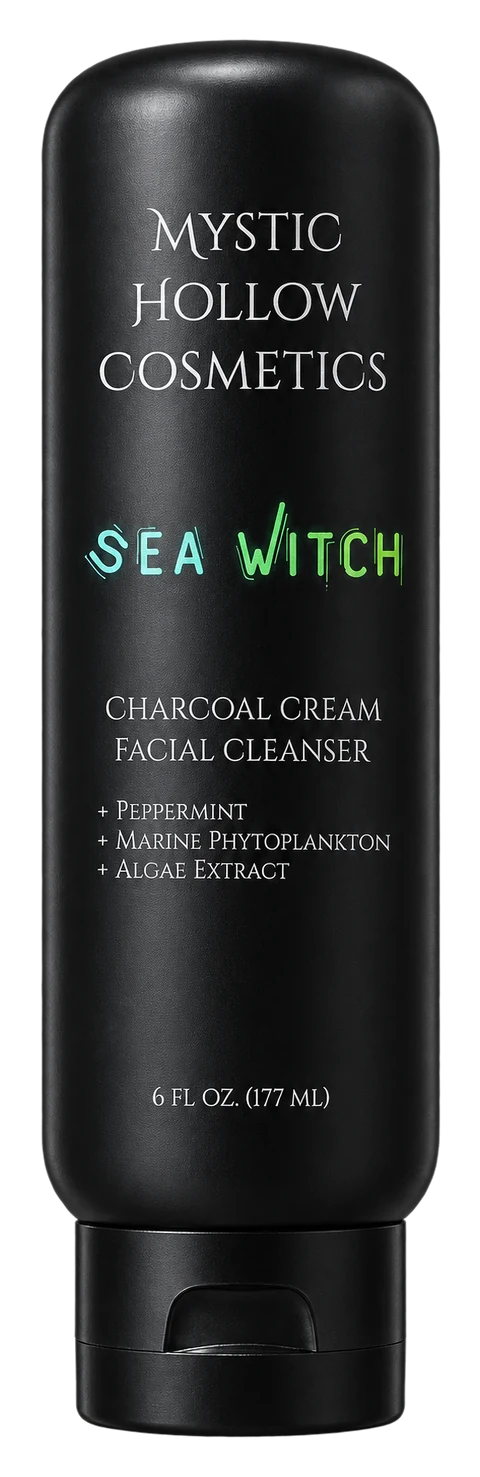
| No sulfates | Sea Witch, our cleanser, cleans with coco-glucoside, made from coconut fatty alcohols and glucose. No list contains sodium lauryl or laureth sulfate. |
| No parabens | No list contains a paraben. Any formula that needs preserving uses only safe, COSMOS-approved preservative systems. COSMOS is an independent standard for organic and natural cosmetics. |
| No silicones | Slip and softness come from plant oils and butters, such as jojoba, and from beeswax. No ingredient ending in ‑cone or ‑siloxane appears on any list. |
| Fragrance, researched first | Some of our fragrances are synthetic. Every one is researched before we use it and is free of known carcinogens, mutagens and organ toxicants. When a formula contains fragrance, its ingredient list says so. |
| No mineral oil or petrolatum | Softening comes from plant oils and butters, such as jojoba, black raspberry seed and meadowfoam seed oils, and cupuaçu and shea butters. |
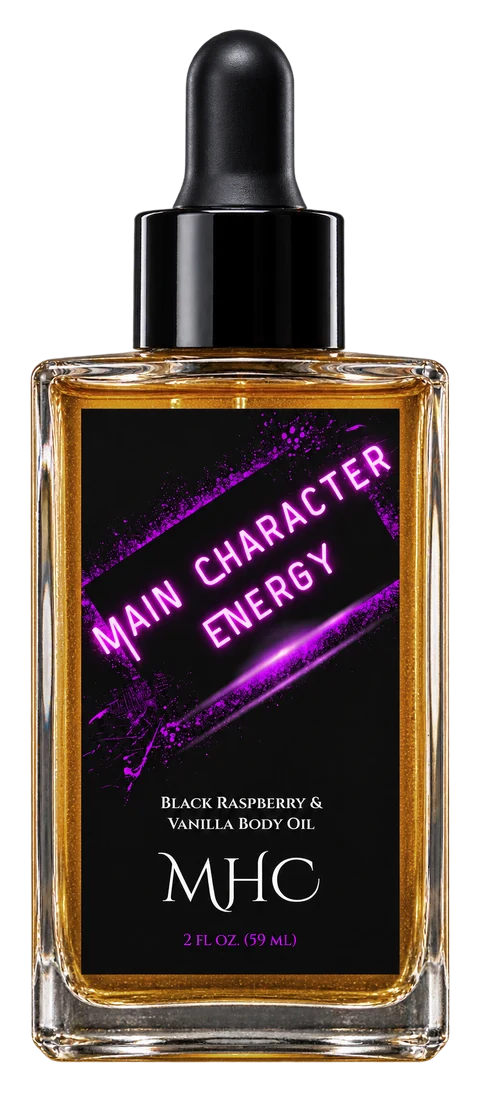
| No FD&C or D&C dyes | Colour comes from charcoal and mineral pigments: titanium dioxide, iron oxides and tin oxide, on synthetic mica. Synthetic mica (synthetic fluorphlogopite) is made rather than mined, which avoids the problems tied to mica mining. |
| Every ingredient named and explained | US labeling rules already require ingredients to be listed, so naming them isn’t the point. Explaining them is: every ingredient has its own page in the ingredient atlas, with what it is, what it does and why it’s there. |
How do we choose fragrance?
Fragrance is where “clean” gets most confusing, so here is exactly what we do. Some of our fragrances are synthetic. Every fragrance is researched before we use it, and each one is free of known carcinogens, mutagens and organ toxicants.
Those words have precise meanings. They are hazard classes used to classify chemicals worldwide, including in US workplace safety rules: carcinogenicity (causing cancer), germ cell mutagenicity (causing heritable changes to genes) and specific target organ toxicity, or STOT (harming a particular organ). EU cosmetics law sets a related rule for every ingredient, fragrance or not: substances classified as carcinogenic, mutagenic or toxic for reproduction, known as CMRs, are banned from cosmetics, with narrow exceptions that the EU’s scientific safety committee must review.
When a formula contains fragrance, its ingredient list will say so. US rules let a fragrance blend appear as the single word “Fragrance”, because, as FDA explains, fragrance formulas are complex mixtures of natural and synthetic ingredients and are often trade secrets. Essential oils are usually listed by plant name instead, such as Mentha Piperita (Peppermint) Oil.
Natural and synthetic don’t sort scents into safe and unsafe. FDA notes that the law treats ingredients from plants the same as those from any other source, and several well-known fragrance allergens occur naturally in essential oils (more on that below). What matters is what each material is, how it’s used, and whether it has been checked.
Why leave those ingredients out?
Because the formulas don’t need them. A cleanser can lift oil without a sulfate. A cream can feel smooth without silicone. A colour can come from a mineral.
Leaving something out isn’t a claim that it’s dangerous. FDA says it doesn’t have information showing that parabens, as they are used in cosmetics, have an effect on human health. The Cosmetic Ingredient Review panel judged alkyl glucosides, the cleanser family coco-glucoside belongs to, safe when formulated to be non-irritating. We would rather explain each choice than sell fear of chemicals. Water and honey are chemicals too.
Is natural skincare safer?
Not automatically. Most of our ingredients come from plants, clays, the hive and the sea, and a few are made in a lab on purpose. Synthetic mica, listed as fluorphlogopite, is made rather than mined. Its flakes are consistent, and it avoids the problems tied to natural mica mining, where child labour has been documented, for example in India’s mica supply chain. The Cosmetic Ingredient Review panel has judged synthetic fluorphlogopite safe as used in cosmetics.
The iron oxides in Main Character Energy are synthetic too, because US rules require iron oxides used to colour cosmetics to be synthetically prepared. Panthenol, provitamin B5, is lab-made as well, and its page says so.
Some natural ingredients are also common causes of skin reactions. A review in the journal Dermatitis describes essential oils as a recognised cause of contact allergy. Lavender oil is rich in linalool and cinnamon bark oil in cinnamaldehyde (“cinnamal” on EU labels), and EU rules require both to be named on a label above set levels, because they are known fragrance allergens.
Which formulas contain common allergens or animal ingredients?
| If you avoid | These formulas contain it |
|---|---|
| Fragrance | Look for “Fragrance” or “Parfum” on the list: a formula that contains fragrance says so. |
| Essential oils | Sea Witch (peppermint), Black Magic (Ceylon cinnamon bark), Remember When (lavender) |
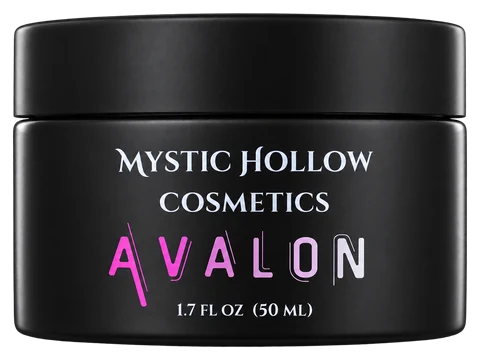
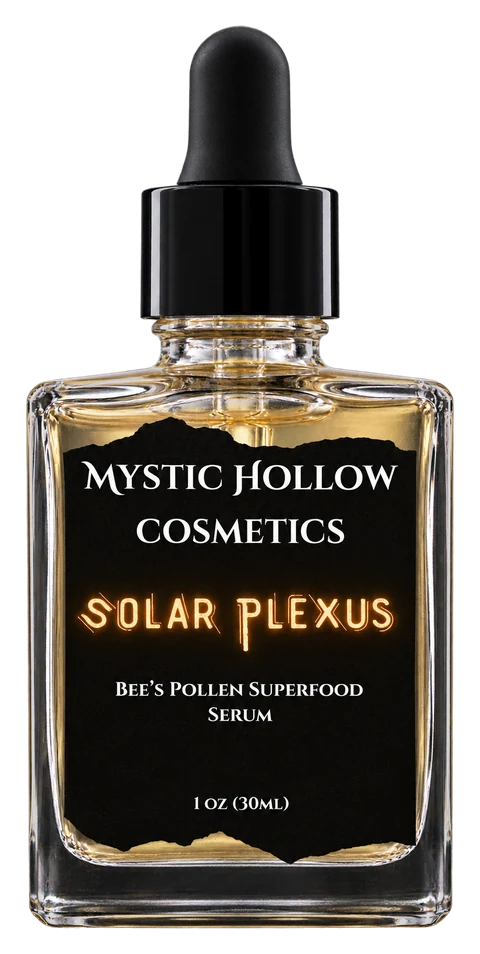
| Bee products | Black Magic (honey), Solar Plexus (bee pollen), Avalon (beeswax and honey extract) |
| Silk | Solar Plexus (hydrolyzed silk) |
| Coconut-derived ingredients | Sea Witch, Solar Plexus and Avalon |
| Cinnamon | Black Magic (Ceylon cinnamon bark oil), Shroom Therapy (cinnamon bark powder) |
| Shea butter | Avalon |
If your skin is sensitive, test anything new first. The American Academy of Dermatology suggests applying a product to a quarter-sized spot, such as the bend of your elbow, twice a day for 7 to 10 days, and using it only if no reaction appears.
What doesn’t clean promise?
Results. Under US law, a cosmetic is for cleansing, beautifying or changing how you look; a product meant to treat or prevent disease, or to change how the body works, is a drug. Ours are cosmetics. They cleanse, polish, moisturize and change how skin looks and feels, and we describe them that way.
Certification. We’re not a vegan brand, and we’re not certified cruelty-free yet. Cruelty-free matters deeply to us, and we aim to be certified as we grow. Shroom Therapy’s ingredient list marks its mushrooms organic, and we repeat that footnote exactly as the list gives it.
the certificates behind “*Organic”
Good skin isn’t magic. It’s good formulation.
Mystic Hollow
Questions people ask
Is clean beauty regulated by the FDA?
No. US cosmetics law doesn’t define “clean”, FDA gives no definition of “natural”, and FDA says “organic” isn’t defined in the laws it enforces for cosmetics. FDA does regulate cosmetic safety and labeling, including how ingredients must be listed.
Are Mystic Hollow products paraben-free?
Yes. None of our ingredient lists contains a paraben. Any formula that needs preserving uses only safe, COSMOS-approved preservative systems.
Do Mystic Hollow products contain fragrance?
When a formula contains fragrance, its ingredient list says so. Some of our fragrances are synthetic, and every one is researched before we use it and is free of known carcinogens, mutagens and organ toxicants. Some formulas are scented with essential oils, listed by plant name: peppermint in Sea Witch, Ceylon cinnamon bark in Black Magic and lavender in Remember When.
Why do you use synthetic mica?
It’s made rather than mined, so its flakes are consistent and it avoids the problems tied to mica mining, including documented child labour. Main Character Energy lists it as fluorphlogopite, and the Cosmetic Ingredient Review panel judged it safe as used in cosmetics.
Is natural skincare better for sensitive skin?
Not automatically. Essential oils and bee products are natural and can still cause reactions. Read the full ingredient list, and test anything new on a small patch of skin for a week before you use it on your face.
Sources
- Cosmetics Labeling ClaimsUS Food and Drug Administration
- “Organic” CosmeticsUS Food and Drug Administration
- Modernization of Cosmetics Regulation Act of 2022 (MoCRA)US Food and Drug Administration
- Is It a Cosmetic, a Drug, or Both? (Or Is It Soap?)US Food and Drug Administration
- Parabens in CosmeticsUS Food and Drug Administration
- Fragrances in CosmeticsUS Food and Drug Administration
- Regulation (EC) No 1223/2009 on cosmetic products, Article 15 (CMR substances)EUR-Lex, European Union
- 29 CFR 1910.1200 Appendix A, Health Hazard CriteriaOccupational Safety and Health Administration (OSHA)
- The COSMOS-standard for organic and natural cosmeticsCOSMOS-standard AISBL
- Safety assessment of decyl glucoside and other alkyl glucosides as used in cosmeticsInternational Journal of Toxicology (Cosmetic Ingredient Review), 2013
- 21 CFR 73.2250, Iron oxides (color additive for cosmetics)Legal Information Institute, Cornell Law School
- Safety Assessment of Synthetic Fluorphlogopite as Used in Cosmetics (Becker et al.)International Journal of Toxicology (Cosmetic Ingredient Review), 2015
- Study on Child Labor in the Scrap Mica Supply Chain in IndiaUS Department of Labor, Bureau of International Labor Affairs, 2024
- Essential Oils, Part IV: Contact Allergy (de Groot and Schmidt)Dermatitis, 2016
- Chemical composition and biological effects of Lavandula angustifolia Mill. essential oils (Aguerd et al.)AMB Express, 2025
- Cinnamon: a multifaceted medicinal plant (Rao and Gan), table of leaf and bark oil componentsEvidence-Based Complementary and Alternative Medicine, 2014
- Commission Regulation (EU) 2023/1545 on the labelling of fragrance allergens in cosmetic productsEUR-Lex, European Union
- How to test skin care productsAmerican Academy of Dermatology
How we write: we make every formula by hand, in small batches, in Henderson, Nevada, and product facts come from our own ingredient lists and product pages. General science is checked against the sources above, and we keep claims cosmetic. Nothing here is medical advice.
Shop this article
The formulas above, with every ingredient named and explained on each page.

Ingredients in this article
More from the journal
How do you read a skincare ingredient list?
Largest amounts first, anything at 1% or less in any order, colours last. How to read an ingredient list in five steps, with our own labels as examples.
Does a charcoal cleanser actually work?
Activated charcoal is porous and holds on to oil, but evidence for bigger claims is thin. What it does in Sea Witch and Black Magic, and what it can’t do.

Face mist vs toner: what’s the difference?
A toner follows cleansing. A face mist hydrates any time, and in our routines it’s the last step, the seal. How they differ, and where Remember When fits.