Does a charcoal cleanser actually work?
Activated charcoal is porous and holds on to oil, but evidence for bigger claims is thin. What it does in Sea Witch and Black Magic, and what it can’t do.
By Mystic Hollow Cosmetics, Henderson, Nevada Published 4 min read
Short answer
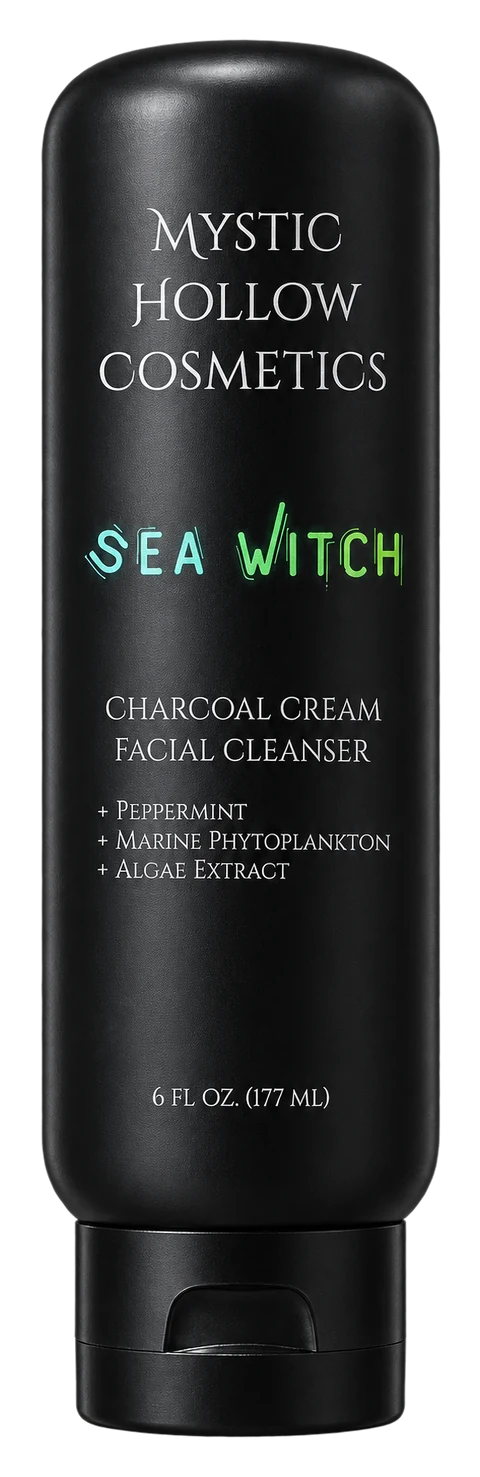
Partly. Activated charcoal is extremely porous, so in a cleanser it can hold on to oil and grime that rinse away with it, and it turns the formula black. It doesn’t “detox” skin; a 2020 dermatology review found no clinical evidence for bigger claims. In Sea Witch, coco-glucoside does most of the cleaning, and charcoal sits near the end.
Key takeaways
- Activated charcoal has a huge internal surface that other substances stick to, a process called adsorption.
- In a rinse-off cleanser it is on your skin for under a minute, so any effect is on the surface.
- A 2020 review in Clinics in Dermatology found no clinical evidence for acne, exfoliating or anti-ageing claims.
- Charcoal sits near the end of both Sea Witch’s and Black Magic’s ingredient lists, and it colours both black without a dye.
- For oily skin, what helps most is gentle, regular cleansing: twice a day, lukewarm water, no scrubbing.
What is activated charcoal?
Charcoal made from carbon-rich material, such as wood or coconut shell, then “activated” with heat and steam to open a network of tiny pores. The result has an enormous internal surface, and other substances stick to that surface, a process called adsorption.
Its best-known use is medical: swallowed, it binds certain poisons in the gut before the body absorbs them, which is how emergency medicine uses it. On skin, in a cosmetic, it does something much smaller. It helps lift surface oil and grime, and it adds colour.
What does charcoal do in a cleanser?
In a rinse-off cleanser, charcoal is on your skin for 30 to 60 seconds. In that time its porous surface can hold some of the oil and grime you are washing off, and they leave with the rinse water. It also turns the cleanser black without an added dye.
Most of the cleaning is done by other ingredients. Sea Witch lists coco-glucoside, a mild glucoside cleanser, second after water, and plant oils, sunflower, coconut, olive and castor, that help loosen oily grime so it rinses away. Activated charcoal is No. 19, just before marine phytoplankton, which closes the list.
Does charcoal detox your skin?
No, and we don’t say it does. A 2020 review in Clinics in Dermatology looked at charcoal’s new life in cosmetics and found that claims for charcoal products treating acne and other conditions aren’t supported by clinical evidence, and that evidence for exfoliating or anti-ageing effects is lacking. The same review describes charcoal in cosmetics as generally safe.
There is a legal line here too. In the US, a product meant to treat a condition such as acne is regulated as a drug, not a cosmetic. Sea Witch is a cosmetic. We say it helps lift the day’s grime, and we leave it there.
Is a charcoal cleanser good for oily skin?
It can be part of a good routine for oily skin, because a cleanser’s job is to remove excess oil. How you wash matters more than what is in the bottle. The American Academy of Dermatology advises washing twice a day and after sweating, using a gentle cleanser, lukewarm water and your fingertips, and not scrubbing. Expect clean, less shiny skin after you rinse, not a change in how much oil your skin makes.
What about charcoal in a scrub?
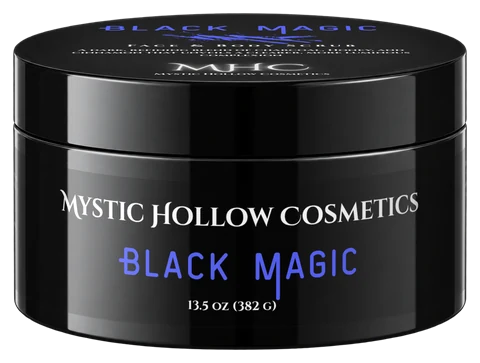
In Black Magic, charcoal is sixth on the list, after sugar, honey, glycerin, meadowfoam seed oil and Moroccan lava clay. The sugar does the polishing; the clay and charcoal help lift oil and grime as you rinse, and the charcoal makes the scrub black.
| Sea Witch | Black Magic | |
|---|---|---|
| What it is | Cream cleanser | Face and body sugar scrub |
| Charcoal on the list | No. 19, as Charcoal Powder | No. 6, as Charcoal Powder |
| What does the main work | Coco-glucoside and plant oils | Sugar crystals |
| Scent | Peppermint oil | Ceylon cinnamon bark oil |
| How often | Morning and night | A few nights a week on the face; as often as you like on the body |
Questions people ask
Is activated charcoal safe to use on your face?
In a rinse-off product it is generally considered safe; a 2020 dermatology review describes charcoal in cosmetics that way. Keep Sea Witch away from your eyes, because it contains peppermint oil.
Does charcoal unclog pores?
There is little clinical evidence that it does. It can help lift surface oil and grime as you rinse, which is the claim we make. A cosmetic cleanser isn’t a treatment for acne.
Why is Sea Witch black?
Charcoal. It sits near the end of the ingredient list, at No. 19, and it colours the whole cream black without an added dye.
Can you use a charcoal cleanser every day?
Sea Witch is made for morning and night. If your skin starts to feel dry, use it once a day and follow with a moisturizer.
Sources
- Charcoal: an ancient material with a new faceClinics in Dermatology, 2020
- Activated Charcoal (StatPearls)NCBI Bookshelf, US National Library of Medicine
- Face washing 101American Academy of Dermatology
- Is It a Cosmetic, a Drug, or Both? (Or Is It Soap?)US Food and Drug Administration
- Safety assessment of decyl glucoside and other alkyl glucosides as used in cosmeticsInternational Journal of Toxicology (Cosmetic Ingredient Review), 2013
How we write: we make every formula by hand, in small batches, in Henderson, Nevada, and product facts come from our own ingredient lists and product pages. General science is checked against the sources above, and we keep claims cosmetic. Nothing here is medical advice.
Shop this article
The formulas above, with every ingredient named and explained on each page.

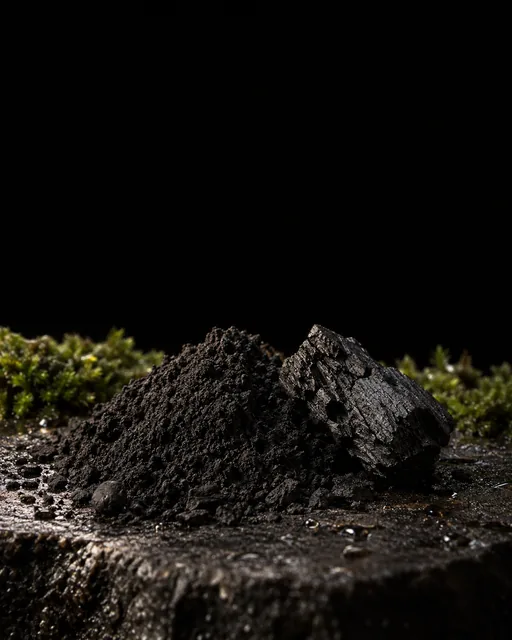
Ingredients in this article




More from the journal

What do mushrooms do in skincare?
Mushrooms are rich in water-holding beta-glucans and in antioxidants like ergothioneine. What the 25 mushroom complex brings to Shroom Therapy.

What does clean skincare really mean?
“Clean” has no legal definition for US cosmetics. Here’s exactly what it means at Mystic Hollow, from parabens to fragrance and mica, and how to check it.

Face mist vs toner: what’s the difference?
A toner follows cleansing. A face mist hydrates any time, and in our routines it’s the last step, the seal. How they differ, and where Remember When fits.