What's inside
Every ingredient, named and explained. The hero ingredients first, then the full list exactly as the label has it.
The full list, in label order
Labels list ingredients from most to least. Each row says what the ingredient is and what it does here; select one to read more.
29 of 29
- Number 01 on the label: Illite and montmorillonite clayIllite (and) Montmorillonite Clays and charcoal Absorbs oil A clay of illite and montmorillonite. Absorbs excess oil. First in Shroom Therapy.
- Number 02 on the label: Bentonite clayBentonite Clays and charcoal Absorbs oilThickens A clay that swells with water, absorbs excess oil and gives the mask its body.
- Number 03 on the label: Moroccan lava clay Clays and charcoal Absorbs oilCleanses A Moroccan clay, also sold as rhassoul. Absorbs oil and leaves skin feeling soft. Hero
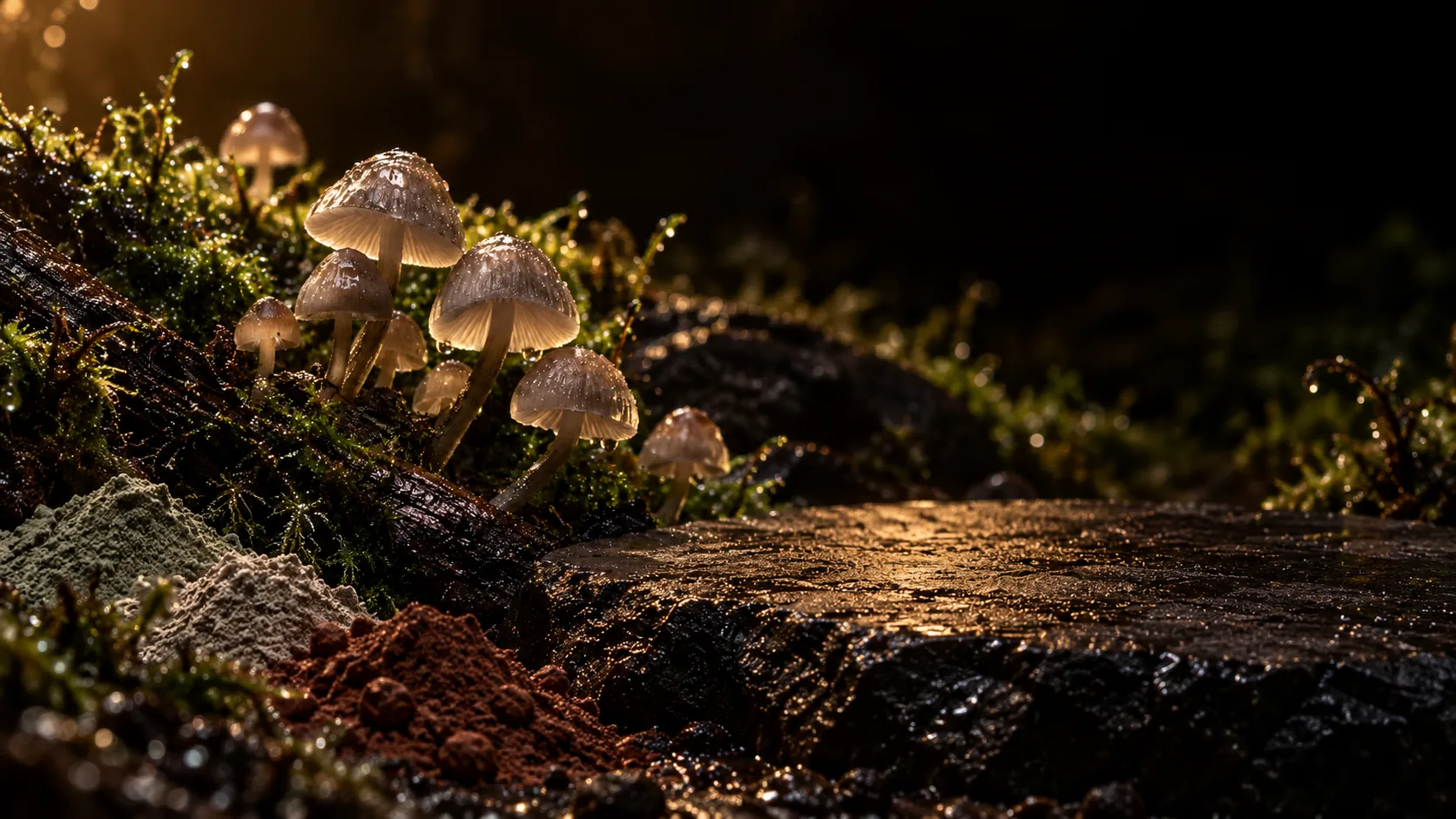
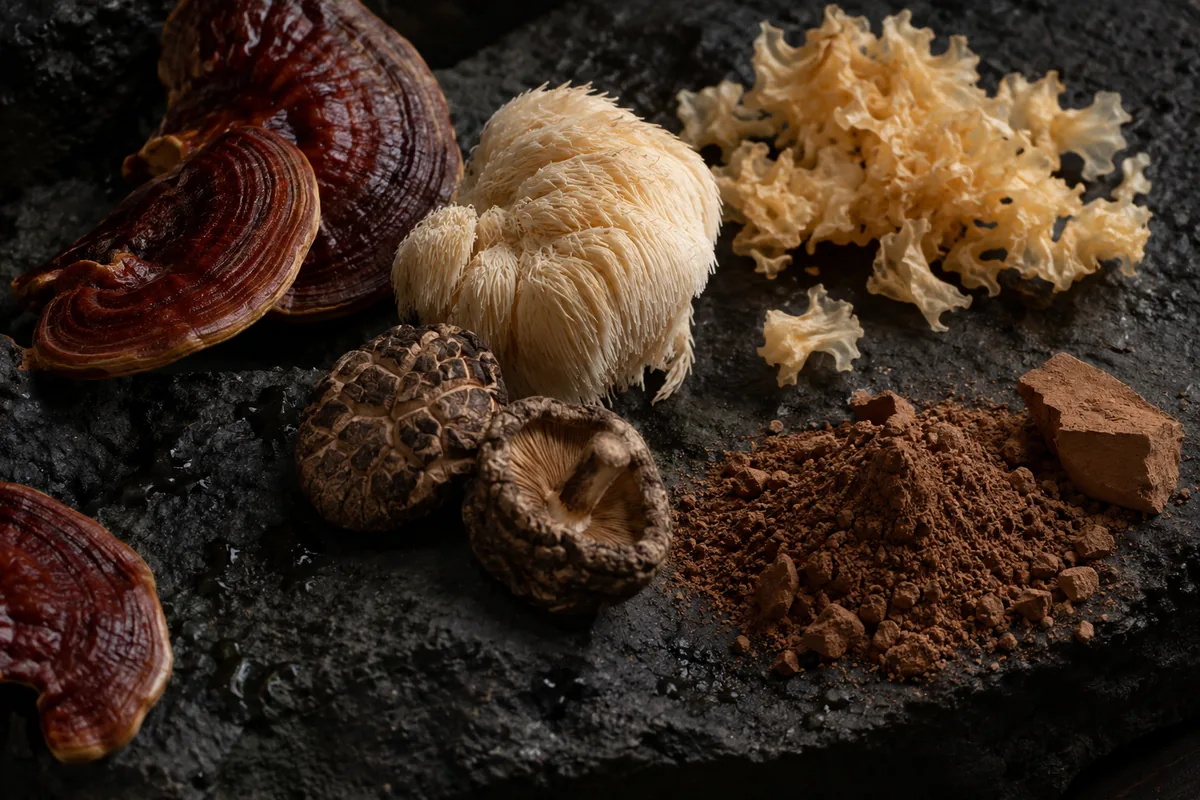
- 04–28The 25 mushroom complexThe 25 mushroom complex: from lion's mane, reishi and chaga to tremella and shiitake, naturally rich in antioxidants and water-holding beta-glucans, in a dry mask with three clays. The list marks each one organic.Hero
- Number 04 on the label: Lion's maneLion’s Mane* (Hericium erinaceus) Mushrooms Conditions Lion's mane (Hericium erinaceus), a white, shaggy mushroom. First of the 25.
- Number 05 on the label: Turkey tailTurkey Tail* (Trametes versicolor) Mushrooms Conditions Turkey tail (Trametes versicolor), a banded bracket fungus. One of the 25.
- Number 06 on the label: ReishiReishi* (Ganoderma lingzhi) Mushrooms Conditions Reishi (Ganoderma lingzhi), a glossy, reddish-brown bracket fungus. One of the 25.
- Number 07 on the label: ChagaChaga* (Inonotus obliquus) Mushrooms ConditionsAntioxidant Chaga (Inonotus obliquus), a hard, black growth found on birch trees. One of the 25.
- Number 08 on the label: CordycepsCordyceps* (Cordyceps militaris) Mushrooms Conditions Cordyceps (Cordyceps militaris), a slender orange fungus. One of the 25.
- Number 09 on the label: White buttonWhite Button* (Agaricus bisporus) Mushrooms Conditions White button (Agaricus bisporus), the everyday mushroom, picked young.
- Number 10 on the label: Open capOpen Cap* (Agaricus bisporus) Mushrooms Conditions Open cap (Agaricus bisporus), the button mushroom grown on until its cap opens.
- Number 11 on the label: PortabellaPortabella* (Agaricus bisporus) Mushrooms Conditions Portabella (Agaricus bisporus), the brown button mushroom grown large and flat.
- Number 12 on the label: ShiitakeShiitake* (Lentinus edodes) Mushrooms ConditionsAntioxidant Shiitake (Lentinus edodes), a wood-grown mushroom with a brown cap. One of the 25.
- Number 13 on the label: MaitakeMaitake* (Grifola frondosa) Mushrooms ConditionsAntioxidant Maitake (Grifola frondosa), also called hen of the woods. One of the 25.
- Number 14 on the label: Black fungus/wood earBlack Fungus/Wood Ear* (Auricularia auricula) Mushrooms Conditions Wood ear (Auricularia auricula), a dark, ear-shaped jelly fungus. One of the 25.
- Number 15 on the label: Tremella/snow mushroomTremella/Snow Mushroom* (Tremella fuciformis) Mushrooms HydratesConditions Tremella (Tremella fuciformis), the snow mushroom, known for holding water.
- Number 16 on the label: PorciniPorcini* (Boletus edulis) Mushrooms ConditionsAntioxidant Porcini (Boletus edulis), the king bolete, with pores instead of gills. One of the 25.
- Number 17 on the label: ChanterelleChanterelle* (Cantharellus cibarius) Mushrooms Conditions Chanterelle (Cantharellus cibarius), a golden forest mushroom. One of the 25.
- Number 18 on the label: MorelMorel* (Morchella esculenta) Mushrooms Conditions Morel (Morchella esculenta), the mushroom with a pitted, sponge-like cap. One of the 25.
- Number 19 on the label: King trumpetKing Trumpet* (Pleurotus eryngii) Mushrooms ConditionsAntioxidant King trumpet (Pleurotus eryngii), an oyster mushroom with a thick white stem.
- Number 20 on the label: Field mushroomField Mushroom* (Agaricus campestris) Mushrooms Conditions Field mushroom (Agaricus campestris), the meadow cousin of the button mushroom.
- Number 21 on the label: Oyster mushroomOyster Mushroom* (Pleurotus ostreatus) Mushrooms ConditionsAntioxidant Oyster mushroom (Pleurotus ostreatus), fan-shaped shelves on wood. One of the 25.
- Number 22 on the label: MeshimaMeshima* (Phellinus linteus) Mushrooms Conditions Meshima (Phellinus linteus), a hard, hoof-shaped bracket fungus. One of the 25.
- Number 23 on the label: Poria cocosPoria Cocos* (Wolfiporia extensa) Mushrooms Conditions Poria cocos (Wolfiporia extensa), a fungus that grows underground on pine roots.
- Number 24 on the label: Sweet toothSweet Tooth* (Hydnum repandum) Mushrooms Conditions Sweet tooth (Hydnum repandum), the hedgehog mushroom, with spines under its cap.
- Number 25 on the label: Wood hedgehogWood Hedgehog* (Hydnum repandum) Mushrooms Conditions Wood hedgehog (Hydnum repandum), another name for the hedgehog mushroom.
- Number 26 on the label: Buna shimejiBuna Shimeji* (Hypsizygus marmoreus) Mushrooms Conditions Buna shimeji (Hypsizygus marmoreus), a beech mushroom grown in clusters. One of the 25.
- Number 27 on the label: Beech brownBeech Brown* (Hypsizygus tessulatus) Mushrooms Conditions Beech brown (Hypsizygus tessulatus), the brown beech mushroom. One of the 25.
- Number 28 on the label: ClamshellClamshell* (Hypsizygus tessulatus) Mushrooms Conditions Clamshell (Hypsizygus tessulatus), a market name for beech mushrooms. One of the 25.
- Number 29 on the label: Cinnamon bark powderCinnamomum verum Bark Powder Botanicals Scent Ground cinnamon bark. Adds a warm, spiced note to Shroom Therapy.
No ingredient in Shroom Therapy matches that filter.
The full ingredient list (INCI)
Illite (and) Montmorillonite, Bentonite, Moroccan Lava Clay, Lion’s Mane* (Hericium erinaceus), Turkey Tail* (Trametes versicolor), Reishi* (Ganoderma lingzhi), Chaga* (Inonotus obliquus), Cordyceps* (Cordyceps militaris), White Button* (Agaricus bisporus), Open Cap* (Agaricus bisporus), Portabella* (Agaricus bisporus), Shiitake* (Lentinus edodes), Maitake* (Grifola frondosa), Black Fungus/Wood Ear* (Auricularia auricula), Tremella/Snow Mushroom* (Tremella fuciformis), Porcini* (Boletus edulis), Chanterelle* (Cantharellus cibarius), Morel* (Morchella esculenta), King Trumpet* (Pleurotus eryngii), Field Mushroom* (Agaricus campestris), Oyster Mushroom* (Pleurotus ostreatus), Meshima* (Phellinus linteus), Poria Cocos* (Wolfiporia extensa), Sweet Tooth* (Hydnum repandum), Wood Hedgehog* (Hydnum repandum), Buna Shimeji* (Hypsizygus marmoreus), Beech Brown* (Hypsizygus tessulatus), Clamshell* (Hypsizygus tessulatus), Cinnamomum verum Bark Powder.
*Organic
How to use it
- 01
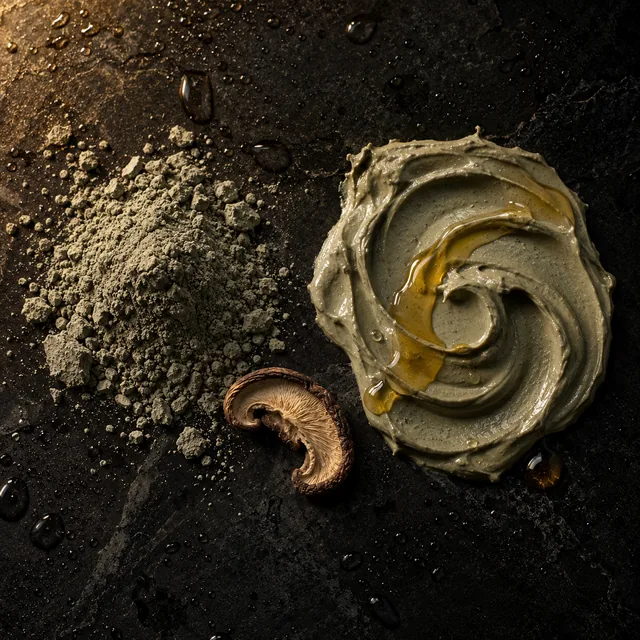
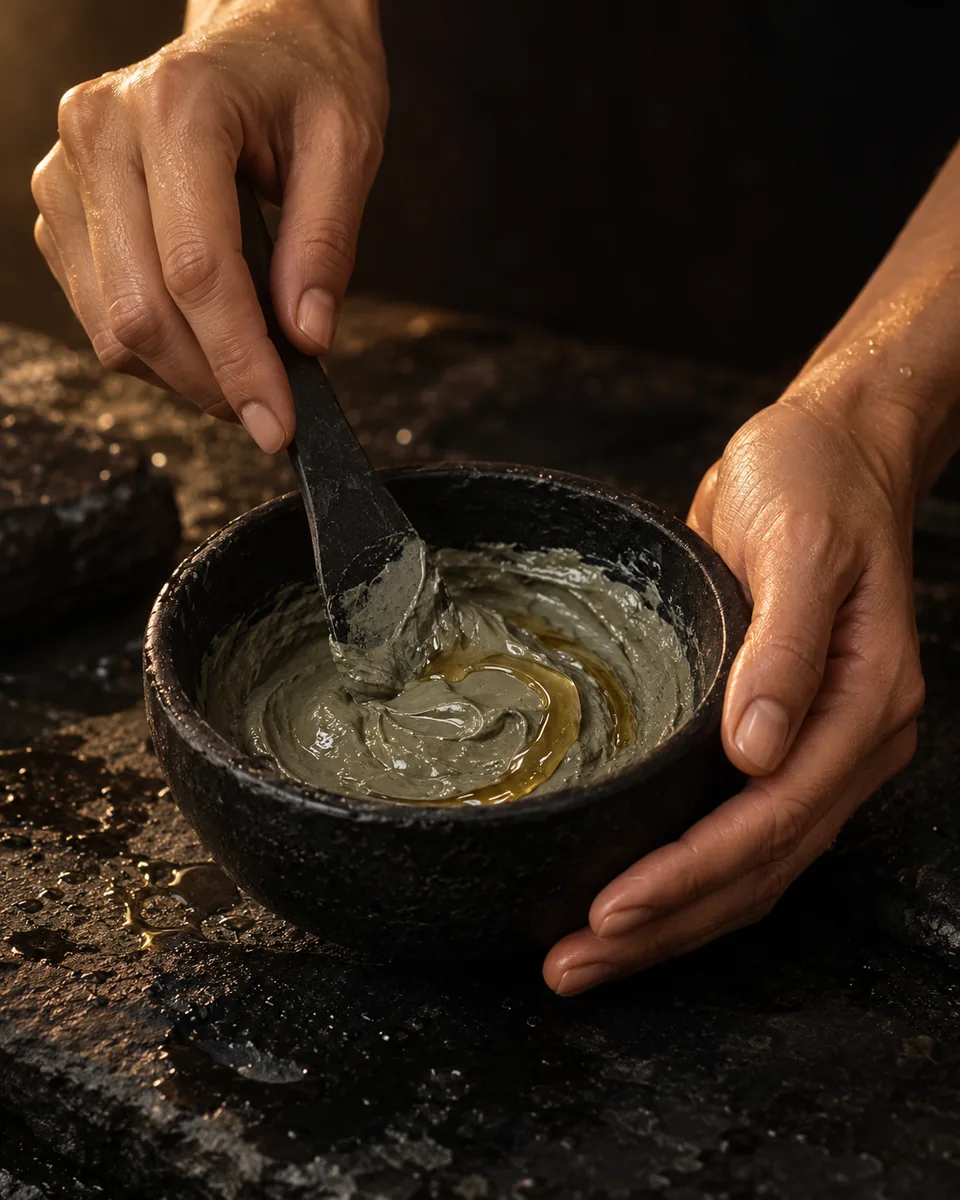
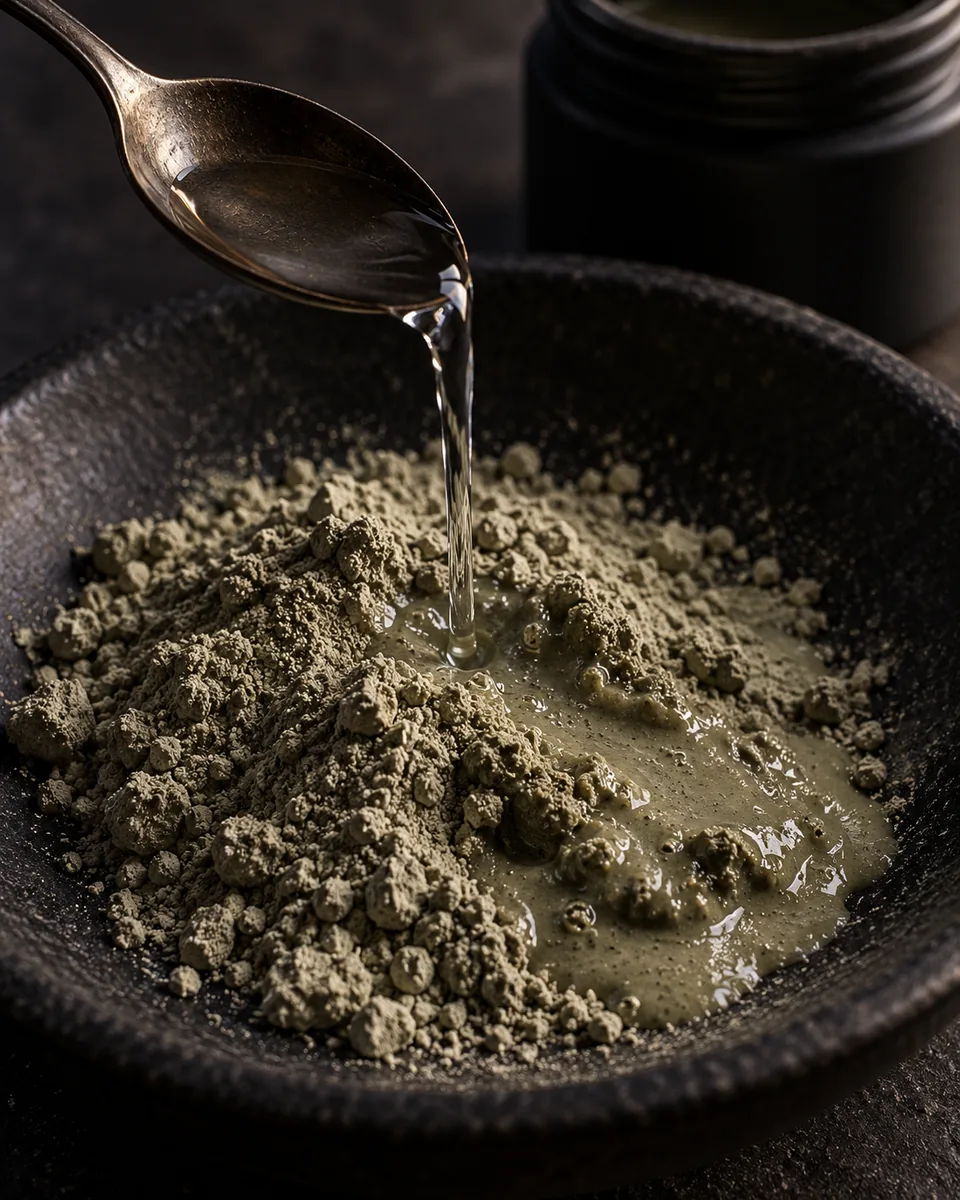
Spoon a tablespoon of the dry powder into a small bowl. Keep water out of the jar.
- 02
Stir in a teaspoon or two of warm water until it is a smooth paste.
- 03
Spread an even layer over your face, avoiding the eyes and lips, and leave it on for about 15 to 20 minutes.
- 04
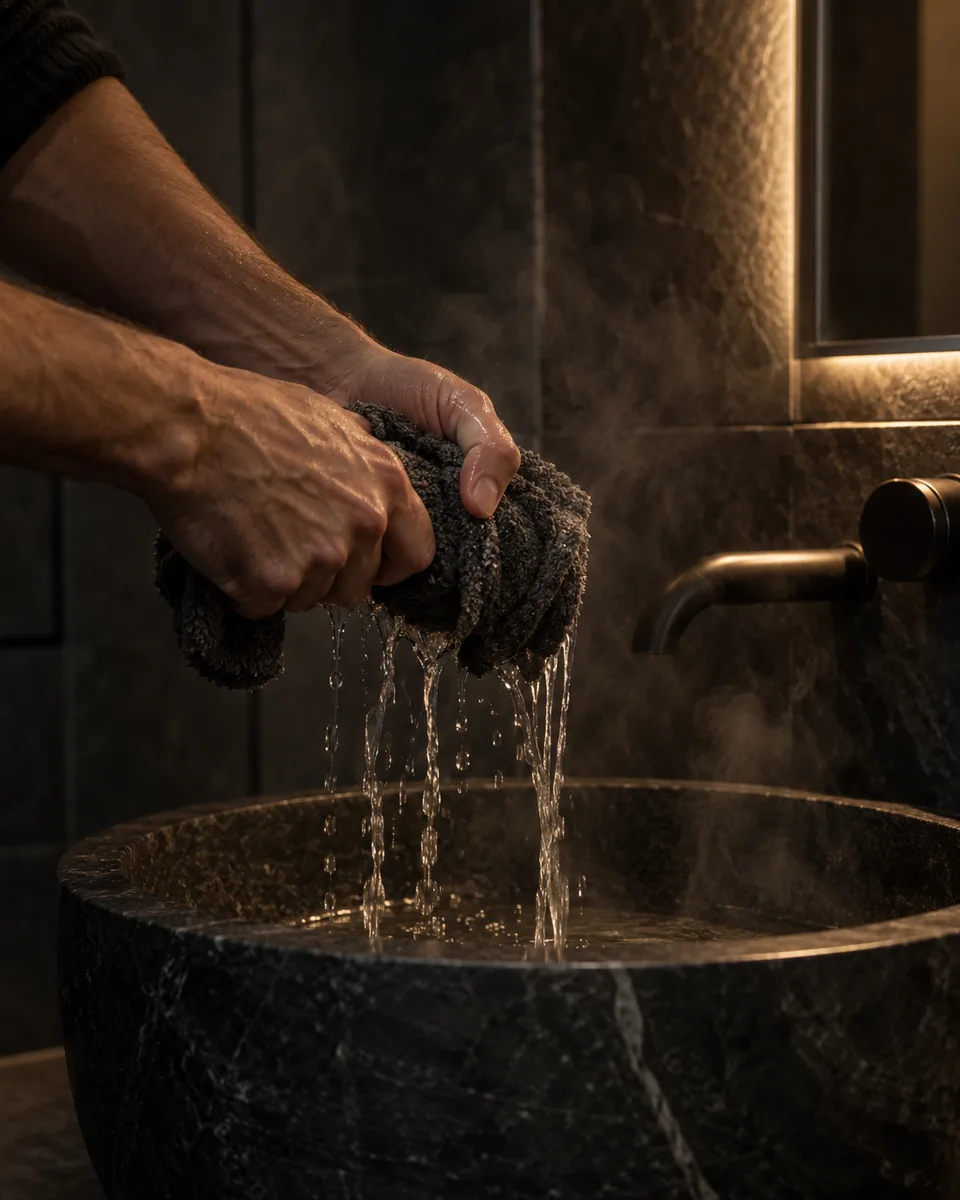
To remove, wet a washcloth with warm water and press it to your face to rehydrate the clay, so it wipes off easier. draft directions; the live store has no How to Use yet
When
Once a week, in the evening
Night Step 1 of 5 (in place of Black Magic)
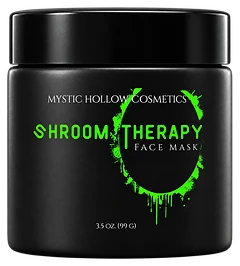
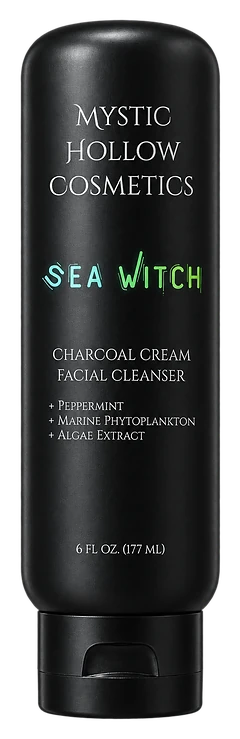
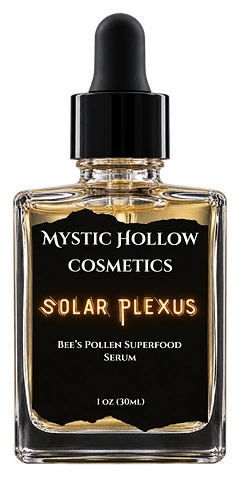
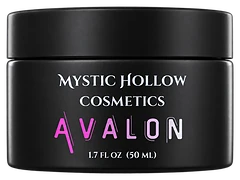
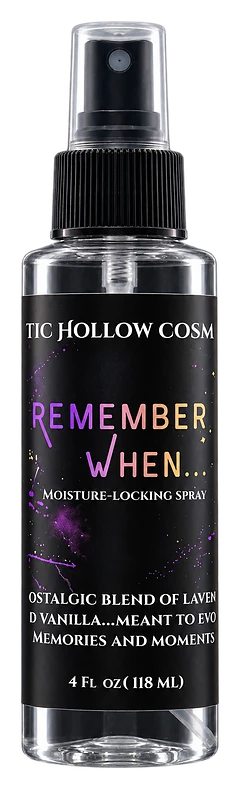
Or the mask, once a week.
What is not inside
Read from the full ingredient list above.
- No sulfates
- No parabens
- No silicones
- No mineral oil or petrolatum
- No FD&C or D&C dyes
- No essential oils
- No animal-derived ingredients confirm the cordyceps is grain-grown
Good to know
Your skin may look a little red after you take the mask off. That's normal: it fades in about 30 minutes, and it's just the mask doing its job. Mix only what you need for one mask, and note it contains cinnamon bark powder, which can tingle.
- Animal-derived
- None
- Essential oils
- None
- Size
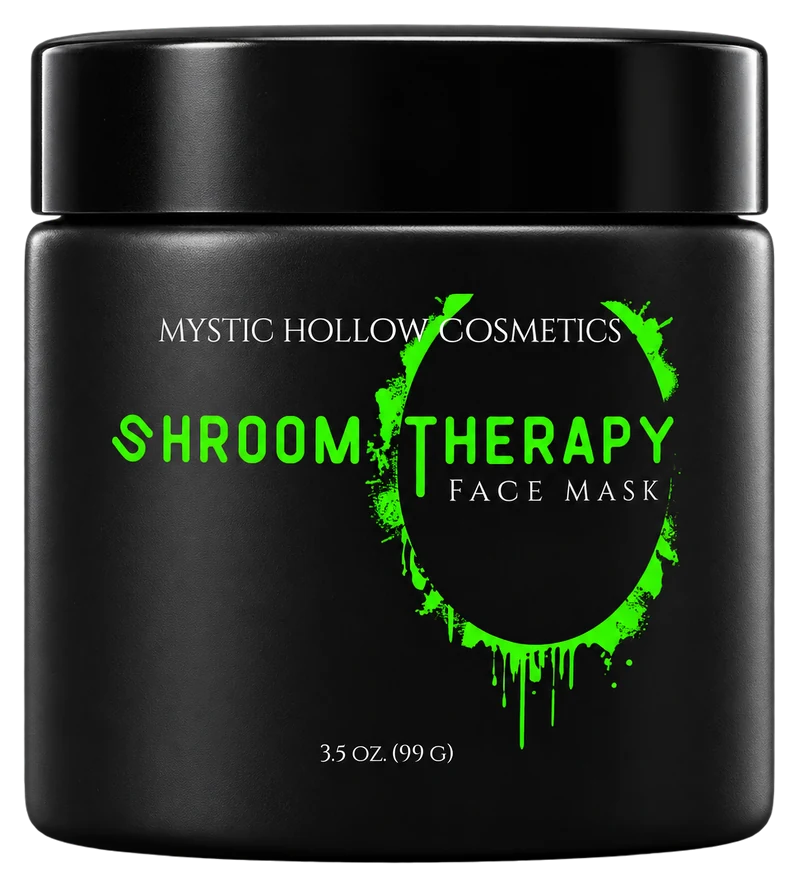
- 3.5 oz (99 g)
- Container
- Black jar
Patch test anything new on the inside of your arm first. Cosmetic use only.
Pairs with
The formulas Shroom Therapy works beside in a routine.
The set
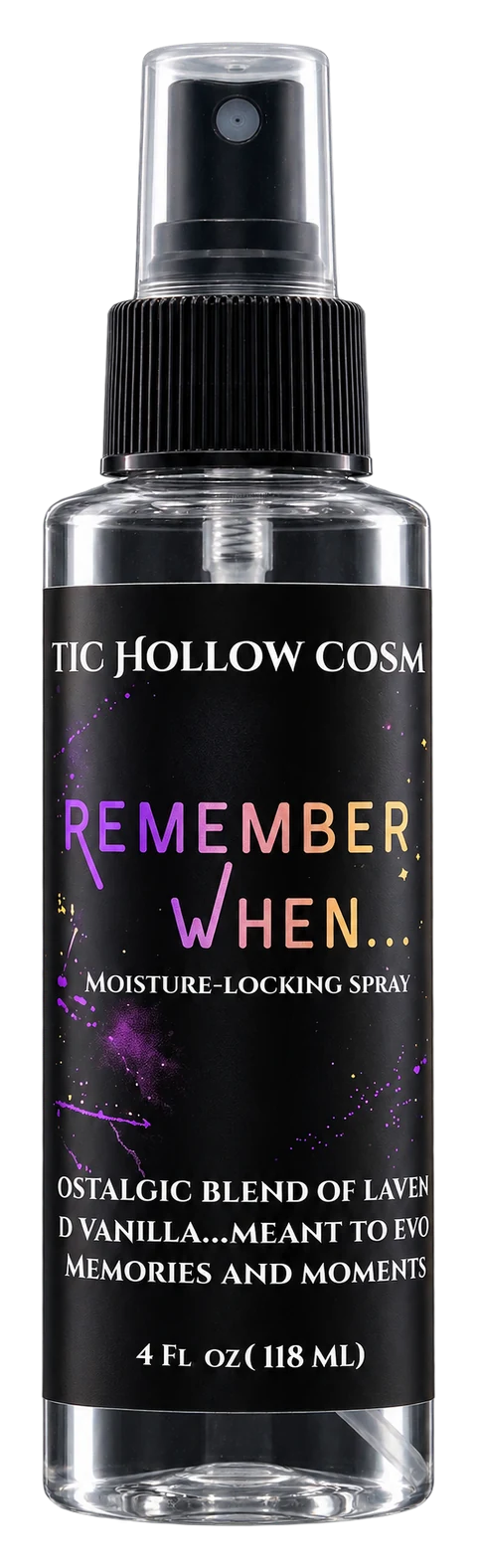
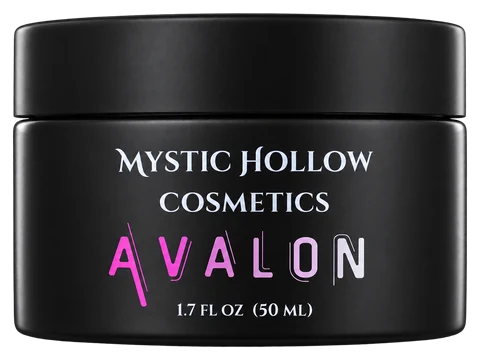
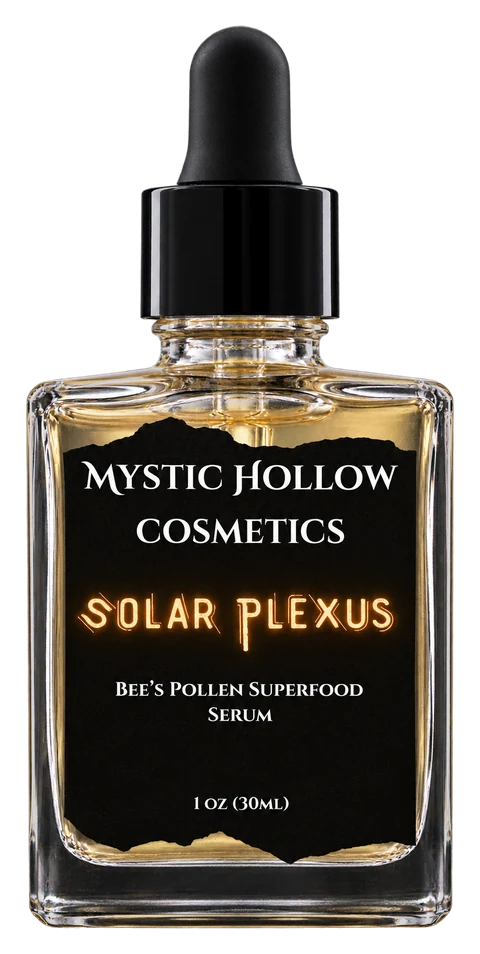
Shroom Therapy, Remember When, Avalon and Solar Plexus, together in one bag.
The full set, $97
Questions
How do I mix it?
Mix a tablespoon of the dry powder with a teaspoon or two of warm water, and stir it into a smooth paste. Mix it fresh each time.
How long do I leave it on?
About 15 to 20 minutes.
How do I take it off?
Wet a washcloth with warm water and press it to your face for a few seconds. That rehydrates the dry clay, so the mask wipes off easier.
Will my skin look red afterwards?
It may, for a little while. That's normal: the redness fades in about 30 minutes, and it's just the mask doing its job. If your skin stings, itches or stays red, rinse it off and stop using it.
What do the 25 mushrooms do?
Mushrooms are naturally rich in antioxidants: porcini, shiitake and oyster mushrooms are among the richest natural sources of ergothioneine, and chaga is full of polyphenols. They also contain beta-glucans, natural sugars that hold water, so skin is left feeling soft. Some, like reishi and cordyceps, have been valued in traditional medicine for centuries, and are often called adaptogens today.
Why is it a powder?
With no water in the jar, it needs no preservative and keeps well dry. You add the water when you mix it, so every mask is made fresh.
Can I use it with Black Magic?
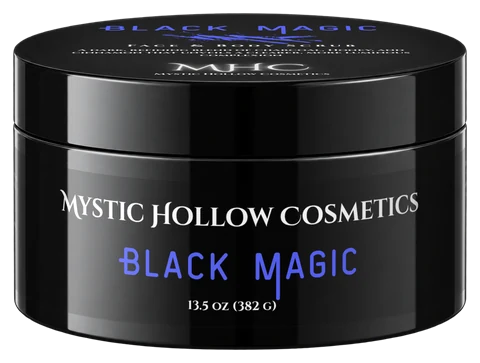
Use one or the other on a given night: the mask once a week, the scrub two or three nights a week.
More in the FAQ, or ask the maker.
Reviews
1 review, rated 5 out of 5.
show the review here?